Letters From The Valley

“Because wisdom doesn’t expire, it echoes.”

  • There’s a quiet truth that lives beneath every strong man you meet, scars.

    Not all scars are visible, and not all were earned in fair battles. Some came from parents who didn’t know better, relatives who wounded instead of protecting, friends who betrayed, lovers who broke trust, or workplaces that crushed the spirit. And some scars, the heaviest of all, are not from this life’s mistakes they are carried through the bloodline, woven into the fabric of generational curses not of our choosing.

    In this age of instant judgment and quick entertainment, it’s easier to grab a phone and record a man’s fall than to reach out and lift him up. It’s easier to criticise than to comfort. We have forgotten that every scar carries a story, and every story holds wisdom if we stop to listen.

    The military has a saying: “When you see your comrade getting his head shaved, wet your own head.” It’s a warning that what happens to one of us can happen to all of us so prepare, learn, and stand together.

    Scripture tells us that scars are not signs of defeat, but of survival. Take David. He was just a shepherd boy, yet God allowed the Devil to send a lion and a bear to threaten his flock (1 Samuel 17:34–36). These were not random challenges they were training. David faced those beasts, and though the Bible doesn’t detail the blows he took, we know he overcame them. And every wound he carried became a silent testimony: “I have fought before, and I can fight again.”

    Without those scars, David would never have stood before Goliath. The truth is simple: if you back down from the lion and the bear in your life the hard home situations, the toxic relationships, the pressures at work, the struggles in your community you disqualify yourself from bigger victories. God does not invest His greatest battles in vessels unwilling to be tested.

    Jesus Himself carried scars. Not just on His hands and feet, but in His heart from betrayal, abandonment, and rejection. He chose the cross, lowering Himself to serve men (Philippians 2:7–8). Those scars became the very proof of His love and His power to save.

    Jim Rohn said “Every life form seems to strive to its maximum except human beings. How tall will a tree grow? As tall as it possibly can. Human beings, on the other hand, have been given the dignity of choice. You can choose to be all, or you can choose to be less. Why not stretch up to the full measure of the challenge and see what all you can do?”  Life will give you opportunities to step forward or shrink back. Your scars are the evidence that you stepped forward.

    So when you see another man’s scars respect them. They are not weaknesses; they are medals. They are the receipts of battles fought, losses survived, and victories earned.

    And if you carry scars yourself, don’t hide them in shame. Show them in truth. Because somewhere, a man is watching you and thinking, “If he made it, maybe I can too.”

    Scars are not the end of the story. They are the ink God uses to write the next chapter.

    If this spoke to you, pass it on to another brother.

    Or better yet, start a conversation, the kind that frees us all.

    You’re not alone. You’re just in the valley and there is always wisdom in the valley.

  • “When God Writes The Story, Love Always Wins.”

    Six months ago, I made a quiet decision loud only in the chambers of my heart.

    I looked at Queen V, this radiant woman who walked beside me with tenderness and steel, and I knew. She was the one. My rib. My rock. My ride or die.

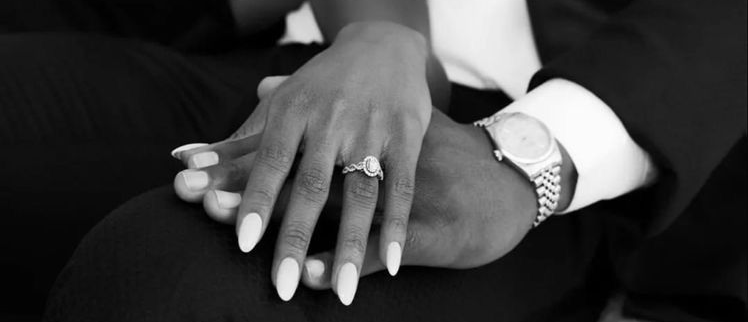
    And now, she is my fiancé.

    Yes, she said it. She said yes.

    This one’s for the men. The ones still picking up the shattered pieces of a past life after love walked away, after years invested, after promises broke like fragile glass under the weight of reality.

    This is a love letter to the brothers in the valley who believe they’ve missed their moment, who think the sun has set on their chance at love.

    I know that valley. I lived there too. Fourteen years of building a life, only to find myself walking alone into a new day. At first, I thought that was the end of the book. But God whispered, “This is just the end of a chapter. Turn the page.”

    And oh, what a chapter this has been.

    Here I am planning a proposal, and men, this is no joke. It requires stealth, cunning, and a squadron worthy of a secret service detail.

    First mission: Operation Ring Size and style. My sister was deployed to North Cost to investigate and confirm Queen V’s exquisite taste in rings. The mission was a success and Queen V’s sister pulled off the impossible. She stole a ring at dawn like a diamond ninja, dashed to the jeweller, and got the size. No suspicion raised. James Bond would be proud.

    Next task: Lock in the perfect day. My older sister aka “Lil mama”, the master planner, orchestrated it with mathematical precision. Tucked between three birthdays in one week, the plan was airtight.

    Zero Day: The weekend was full of distractions birthday parties, church, laughs, love, and light. But I was living in two timelines, one in the present, and one racing ahead to tonight where everything would change.

    We left church. She noticed something was off.

    You okay babe?

    Yeah, just tired from the two big nights.

    Alright babe, you rest tonight.”

    But tonight wasn’t about rest.

    We pulled into the driveway. I pretended I needed the bathroom. She, ever gentle, said, “Be careful on the stairs, babe.”

    I bolted up four flights. And when I opened the door, my breath caught. My sister had transformed the mansion into a sacred space of love. Flowers bloomed and balloons in corners like blessings. Candles whispered of peace. Lights danced like stars cheering us on. My siblings every one of them stood ready. Her only sister had flown in, taking time off for the first time ever, just for this moment.

    Then the call came.

    She’s here.”

    She walked in. Glowing. Radiant. Tears welled in her eyes before I even spoke.

    No babe… don’t tell me…

    I held her hands. The world stood still.

    You have been with me through it all. Even when I wasn’t easy to love, you never let go.

    Then I dropped to one knee.

    “Will you be my helper? 

    Will you be my backbone?

    Will you be my best friend?

    Will you be my ride or die?

    Will you… be my wife?”

    With tears trembling on her cheeks, she whispered…

    Yes.

    This post isn’t just about a proposal, it’s about resurrection. It’s a message to every man sitting in silence after a separation, convinced they’ve been counted out.

    Brother, let me tell you, your best days aren’t behind you. They’re just ahead.

    What you lost wasn’t your end, it was your invitation to a new beginning. That relationship may have raised your children. But this next one? It will raise your legacy. 

    You see, God doesn’t just give you what you want. He gives you what your calling requires. You need someone who can walk beside your purpose, shoulder the storms, and dance in your victories. You need a Queen for the kingdom you’re about to build.

    “He who finds a wife finds a good thing and obtains favour from the Lord.” Proverbs 18:22

    Yes, favour. Grace. A divine upgrade.

    “The wound is the place where the light enters you.” Rumi

    Sometimes separation cracks you open, only to let in something greater than you imagined.

    “Out of suffering have emerged the strongest souls.” Kahlil Gibran

    Brother, your scars don’t disqualify you, they qualify you for deeper love, deeper joy, deeper destiny.

    To my beautiful Queen V, from the moment you walked into my life, you didn’t just step into my story you rewrote it. You saw the man I was, the man I had been, and the man I was meant to become… and you loved me through all of it. Not just in the light, but in the shadows when I was broken, when I doubted, when I didn’t even recognise myself. You held my hand and whispered, “We’re going somewhere better.”

    Thank you for saying yes, this chapter is ours.

    And to the men in the valley, lift your head. Light is coming. Love still lives. And when it finds you, it’ll heal places you thought were long dead.

    Hold on, King.

    The right woman won’t just love you, she’ll see you.

    She won’t just stand beside you, she’ll walk into destiny with you.

    And when she does?

    All you’ll need to do is ask…

    And she’ll say: Yes.

    “Letters from the Valley” will continue sharing reflections like this, raw, redemptive, and real. If this resonated with you, share it. Start the conversation in your own home. It may just save a marriage. It may just save a man.

    And if you need someone to talk to, you’ve found your tribe.

    Welcome to the Valley.

  • “Guard your heart and your testimony, honour consent, protect dignity.”

    In recent years, we’ve seen a shift in how men pursue intimate relationships. The old bravado of “It’s fine, no worries” isn’t enough anymore. Too many men, often the innocent, have found themselves caught in legal storms they never imagined.

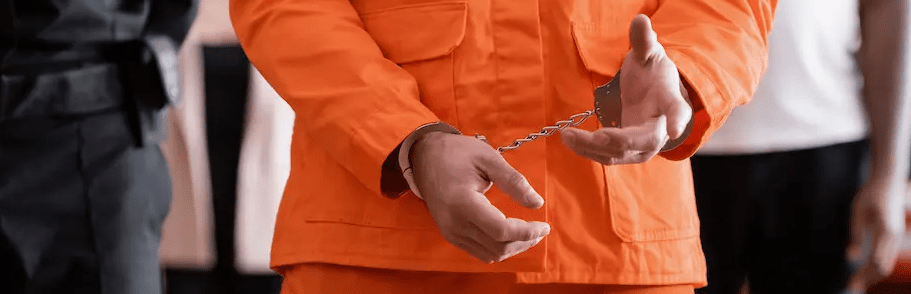
    A gentlemen I came to know spent over 12 months in prison after a false rape allegation. Though he was eventually cleared and offered compensation, he refused it believing that nothing could truly restore what was lost. He told me, “Now, I’m terrified even to enter a relationship. The past haunts me; I’ve lost potential partners and peace.”

    Across Australia and Europe, the pressure is mounting. Some men now go as far as signing consent forms, recording short videos stating, “I consent,” or texting clear written permission before intimate contact. It may seem strange but in a world rife with ambiguity, caution becomes courage.

    False rape allegations is not a myth and it’s rare but not negligible.

    • Australia: A comprehensive review of 812 rape cases in Victoria (2000–2003) found 2.1% were clearly false(VIC Rape Cases ).
    • UK: Research by the Crown Prosecution Service indicates false allegation rates around 2–4%, with many “no crime” cases also never proven true (research.open.ac.ukSpringerLink).
    • Europe: Rates between 1–9%, dropping under 5% when truly false claims are distinguished from unproven ones (SpringerLink).

    Though statistics suggest false claims are a small minority, their impact is devastating. Innocent men have lost jobs, homes, reputations, even their sanity. One Australian man spent months in custody for a crime later proven false; another, Daniel Jones, was jailed for a false accusation by his ex-fiancé draining $600,000 in legal fees (Parkinson Case).

    Even high-profile cases show the system can fail. 

    Awareness

    • For Men:
      1. Prioritise explicit consent verbal, texted, or video. A quick “Are you ok with this?” can avoid years behind prison walls.
      2. Document if in doubt screenshot messages, save lewd texts, keep records of mutual agreement.
      3. Seek legal advice early consult a criminal defence lawyer immediately if accused (Sydney Criminal Lawyers).
      4. Support your emotional healing you’re not invisible. Speak to trusted friends, counsellors, or mentors.
      5. Redefine courage it’s not bravado. It’s accountability, respect, and humility.
    • For Women:
      1. Be clear and direct. Uncertainty leads to misunderstanding.
      2. Document your boundaries via text or conversation not for war, but to avoid miscommunication.
      3. Embrace empathy, false accusations hurt real people and reinforce distrust where there shouldn’t be.
      4. Speak up if you’ve made a false accusation, correct it. True respect grows from breeding truth, not shame.
      5. Foster safe spaces for dialogue none of us are perfect, but understanding reduces conflict.

    Legal experts urge caution against both extremes: discarding allegations or presuming guilt.

    • The Law Reform Commission warns that favoring one side erodes the presumption of innocence (The Australian).
    • In Australia, several judges have raised alarms: “Innocent men are being hounded by weak prosecutions” (The Australian).
    • Cases like Tahir Shahdin’s wrongly accused and held for months until charges dropped show how police failures can devastate lives (dailytelegraph.com.au).

    We must support both justice for survivors and protection for the innocent. Any move away from procedural fairness will harm everyone.

    Building safer relationships begins with clarity, not confusion.

    • Consent is not optional, it’s required.
    • Consent can change at any time.
    • Mutual, verbal, and understood: that is real respect.

    If you’re a man, ask yourself:

    Have I ever assumed “yes”? What did that silence really mean?

    If you’re a woman, ask:

    Have I spoken clearly enough? Could my partner have misunderstood?

    Together, we can reshape culture beyond fear of accusations, into courage for honest connection.

    Final words,

    “The measure of a society is not only how it protects its victims, but how it restores its innocents.” Adapted from John Marsden (Australia’s lawyer who fought defamation for Geoffrey Rush) (lylawyers.com.auJ.Marsden)

    Conversations about consent are uncomfortable but necessary. This isn’t just a legal matter, or moral it’s about respecting the soul of another human being.

    Start the conversation. Share this post. Open your heart.

    Let Letters from the Valley is a place where awareness, empathy, and courage meet.

  • “The wilderness is not punishment. It is preparation.”

    There are moments in a man’s life when the world stops not with a bang, but with a stillness that aches. It’s not the silence of peace, but the silence of absence. And for many men, that stillness begins in the space where once there was family the laughter of children, the rhythm of a partner’s voice, the fullness of a shared life.

    But what happens when that rhythm disappears? When the house echoes? When the children are gone or when separation pulls a man from his home?

    For too many, it feels like exile.

    Not a journey we chose but one we are sentenced to.

    You see, we men have been taught to keep it together, hold it in, “be strong” as if bleeding inside isn’t part of being alive. We are expected to provide, not process. To build houses, not talk about how empty they feel without love inside.

    “Even the lion, the king of the jungle, sometimes retreats to the shadows to heal.” African proverb

    And so we go quiet. We vanish behind work. We over socialise. We drink, distract, overthink. Or worse we pretend we’re fine. But behind every “I’m good, bro” is often a storm left unnamed.

    I once had a dear friend a man with a big heart, gifted hands, and a life full of laughter. You’d always find him hosting BBQs, playing music, or organising the next party. His door was always open, and his life was always full… or so it seemed.

    One day, he said to me, “brother, I don’t know how to stay home alone.”

    It hit me hard.

    Here was a man who could build, fix, make, organise but didn’t know how to be still with himself.

    I told him, “Brother, maybe it’s time to pull away from all of it. Step back. Listen to your inner man.”

    But for years, he couldn’t. The noise of his lifestyle was louder than his soul’s whisper.

    Then life intervened as it often does.

    He broke his leg in a soccer game.

    Suddenly, he had no choice but to stay home for three long months.

    And that’s when the shift happened.

    He told me later, “That was the best thing that ever happened to me. I finally heard myself. I know what I want now. And I know who my real friends are.”

    Sometimes, the wilderness finds you not as punishment, but as the only way left for your soul to get your attention.

    We live in a time where men are praised for working overtime, but not for emotional honesty. Where being a good man is measured by rent paid, not relationships nurtured.

    But manhood must mean more.

    To love, to serve, to show up for your kids is strength.

    To cry is strength.

    To ask for help is strength.

    To say “I don’t know, but I want to learn” that is the beginning of real manhood.

    “No matter how full the river, it still wants to grow.” Congolese proverb

    And maybe that’s the whole journey of life: to keep growing even through exile, even in pain.

    The Scriptures are full of men who walked through wilderness:

    • Moses, exiled from Egypt, found his calling in the quiet lands of Midian.
    • David, hunted and hiding in caves, wrote psalms that still bring comfort today.
    • Jesus himself the Son of God spent 40 days in the wilderness before his ministry began.

    “He withdrew to lonely places and prayed.” Luke 5:16

    “Blessed is the man who remains steadfast under trial… James 1:12

    These seasons are not the end. They are the beginning of purpose, healing, and clarity.

    So to the person reading this

    If you feel like you’re walking alone…

    If your house has grown quiet…

    If your hands are full but your heart is empty…

    Know this: you’re not broken. You’re becoming.

    Lean into the stillness.

    Listen to your soul.

    Let this exile be your exodus.

    “Until the lion learns to write, every story will glorify the hunter.” Zimbabwean proverb

    It’s time we told our stories.

    It’s time we came home to ourselves.

    If this spoke to you, pass it on to another brother.

    Or better yet, start a conversation, the kind that frees us all.

    You’re not alone. You’re just in the valley and there is always wisdom in the valley.

  • “As iron sharpens iron, so one man sharpens another.”

    There’s something quietly sacred about a gathering of men, not for sport or spectacle, but for soul work.

    Last weekend, we experienced exactly that.

    At what began as a simple catch-up in Dengiri’s home, a relaxed gathering with a few close friends, something deeper emerged. What unfolded around that humble table wasn’t just conversation; it was healing. A rekindling of purpose. A reminder of the mission we’ve too often forgotten.

    I’ve known Dengiri for years. Many of us have watched his evolution, a man once immersed in the neon glow of city life, organising parties, promoting clubs, and rubbing shoulders backstage with global superstars across Brisbane, Melbourne, and the Gold Coast.

    But something changed when he crossed that quiet milestone of 40, in Africa. He moved to the red centre of Australia, far from the flashing lights, the high rise dazzle, the ocean front boat parties. It’s a quieter life now. The kind that invites reflection. The kind that strips you back to the bones of who you really are.

    He still carries that sparkle, but now, it’s in the stories he shares with younger men. In the advice he offers freely. In the stillness he’s chosen over the noise.

    What was meant to be just a relaxed evening among friends turned into something sacred.

    We laughed. We ate. But most importantly, we talked.

    The conversation turned toward something all too common, and yet all too silent, the mental and emotional weight many men carry in their roles as husbands, fathers, and providers. We named the elephant in the room: the growing crisis of family breakdown, a quiet pandemic that is tearing homes apart while men stand silently in the rubble.

    “We thought being good men meant paying the bills. That if the lights are on and the rent is covered, we’ve done our job.”

    But that’s only half the story.

    The other half is harder. It’s about presence, not just provision. It’s about knowing your wife’s needs before they become wounds. It’s about holding your child, not just feeding them. It’s about showing up, not just clocking in.

    And in the middle of this conversation, something broke open.

    One of the brothers, quiet all evening, shared that he’d recently separated from his wife. His voice trembled. His pain was raw.

    And yet, he said, “I’m thankful. I really needed this.

    In that moment, we all understood something holy had happened. That real strength is not in silence, but in surrender. That true masculinity is not stoicism, but shared burden.

    “Carry each other’s burdens, and in this way you will fulfil the law of Christ.”

    We told him, You are not alone.

    We hugged him like family.

    We reminded him he is always welcome here. That this house, this table, is his refuge.

    There is a special kind of power in men opening up to other men, in peeling back the armour we’ve been trained to wear and saying, “I’m tired. I need help.”

    And that night, we all agreed: this is what we’ve been missing.

    Man Cave, not to escape responsibility, but to reclaim it.

    To talk.

    To cry.

    To remember that we are not made to walk alone.

    “Two are better than one… If either of them falls down, one can help the other up.”

    This is just the beginning.

    We believe there is a movement coming.

    A movement of men returning to their true mission: not just to provide, but to protect, to be present, to lead in love.

    To be the kind of men who hold space for each other and in doing so, begin to heal their homes.

    And so from this humble gathering, born in the heart of the red centre, a new mission begins. One that started not with fanfare, but with vulnerability.

    To all who are reading this, wherever you are in life, whether you’re still dancing in the clubs or quietly rebuilding after a storm, know this:

    You are not alone.

    You are seen.

    You are needed.

    Let us return to each other. Let us hold each other accountable. Let us listen.

    Because sometimes, the revolution begins not in a crowd, but in a living room.

    Not with noise, but with honesty.

    “Letters from the Valley” will continue sharing reflections like this, raw, redemptive, and real. If this resonated with you, share it. Start the conversation in your own home. It may just save a marriage. It may just save a man.

    And if you need someone to talk to, you’ve found your tribe.

    Welcome to the Valley.

  • Picture this with me for a moment. A child born in a remote Indian village, where water flows more often from eyes than taps, where futures are dreamed in dusty roads and hunger is a daily companion. This child is cradled in the arms of poverty, yet held by a spirit much bigger than their circumstance.

    Now, imagine this child, years later. Adopted, educated, nourished in body, mind, and soul. Ten years pass. They walk into a room, and heads turn. Why? Because what they are now is not what they came from. It’s not what the world expected from them. The transformation is startling and yet, somehow, it was always within them.

    How?

    The secret lies in the vast, fertile ground between our ears: our imagination.

    Scripture says it plainly: “As a man thinketh in his heart, so is he” (Proverbs 23:7, KJV). But what does that really mean? It’s not just a poetic line, it’s a formula for transformation. If you can see it in your mind, you can be it in your life.

    Modern science agrees.

    Dr. Caroline Leaf, a cognitive neuroscientist, writes that “thoughts are real things” and “they have a structure and can change the physical makeup of your brain” (Leaf, 2013). This isn’t just feel-good stuff. It’s neuroscience. What you think, over time, becomes a groove in your mind, a pattern that shapes your actions, your habits, your life. This is known as neuroplasticity the brain’s ability to rewire itself based on experience and thought (Doidge, 2007).

    So yes, we are the product of our imagination. And not just the product, we are the sculptor too.

    Let’s bring this down to earth or rather, to clay.

    Imagine a potter, staring at a lump of earth. You see dirt. They see destiny. In their mind, a vase is already there, a vessel waiting to be revealed. They don’t create the form, they uncover it. That’s what imagination does. It sees what could be and draws it out from what is.

    In the same way, inside each one of us lies a masterpiece not yet complete, but fully possible.

    Take Barack Obama. Born to a Kenyan father and American mother, raised across continents, shaped by brokenness and beauty alike. He was no stranger to struggle, but he was no slave to it either. He read. He studied. He imagined himself beyond his postcode, beyond his pain. He dared to dream himself into a lawyer… then into a senator… and then, impossibly, into the White House.

    He didn’t wait for someone to tell him what he could be. He saw it first within.

    And when you change how you see yourself, others will follow. People meet you at different stages, some will see only the present version of you. Others, the evolved one. But the truth is, every version of you exists within the seed of imagination. Which one you water, which one you feed, that is the one that will rise.

    In this valley of life, where the winds of hardship blow hard and the soil sometimes feels too rocky to grow anything good, remember this: your imagination is sacred ground. Guard it.

    Think of it like a garden. You don’t throw rubbish in a garden you want to eat from. You weed out lies, and water the dreams. You prune distractions. You nourish the soil with stories of those who have gone before you, people like Thomas Sankara, Malcolm X, or even your own neighbour who started with nothing and now stands tall.

    Research by the University of California shows that positive thinking isn’t just emotional, it’s physical. Optimism is linked to lower blood pressure, longer life, and better immune response (Boehm & Kubzansky, 2012). It’s not magic, it’s medicine.

    In closing, I leave you with this:

    Inside you is a version of yourself that is stronger, wiser, kinder, and more resilient than the world has yet seen. But to bring that person into the world, you must first see them, vividly, courageously, with your mind’s eye.

    The artist sees art in clay.

    The dreamer sees a palace in sand.

    The believer sees wings where others see weights.

    So go ahead, see it.

    And then, slowly, day by day…

    Become it.

  • In this beautiful, often bewildering journey of life, people enter and exit our story like waves on a shore. Some are anchors, others are wind both necessary, both fleeting. Not everyone who walks into your life is meant to stay. Some arrive merely to teach, awaken, challenge, or prepare us and then, like seasons, they pass.

    As the philosopher Heraclitus once said, “The only constant in life is change.” The ancient Stoics built entire lives on this truth. They urged us to hold loosely what we love not from cold detachment, but from deep reverence for impermanence. Marcus Aurelius wrote, “Accept whatever comes to you woven in the pattern of your destiny, for what could more aptly fit your needs?

    In a similar spirit, Scripture echoes the sacred rhythm of release:

    To everything there is a season, and a time for every purpose under heaven.” Ecclesiastes 3:1

    Modern psychology affirms this wisdom. Studies on emotional resilience and post-traumatic growth (Tedeschi & Calhoun, 2004) show that people who learn to accept endings and forgive are more likely to experience personal growth, better mental health, and a stronger sense of meaning.

    Forgiveness, then, is not simply a moral good it is a healing art. It is the bridge between what was and what can be.

    Forgive as the Lord forgave you.” Colossians 3:13

    Forget the former things; do not dwell on the past. See, I am doing a new thing!” Isaiah 43:18-19

    In practical terms, forgiveness doesn’t require reconciliation or agreement. It is simply this: releasing the power someone holds over your peace. According to research by Worthington et al. (2007), practicing forgiveness is associated with reduced stress, lower blood pressure, and greater spiritual well-being.

    So how do we let go? We honour the gift of the season they were part of. We bless their role in our becoming. And then we open our hands.

    Not everyone who comes is meant to stay. But every soul we meet leaves fingerprints on our becoming.

    Let go with love. Walk on with hope.

    Your next chapter is already whispering your name.

    Stay blessed.

    S.Beston

  • It was a Thursday. Nothing strange about it. The kind of Thursday that slips between the cracks of memory, quiet and unassuming. I woke up for work, like always. She was still in bed, tucked into the morning like a child beneath a warm quilt. I kissed her on the forehead, soft and simple. “Have a great day,” I said. “You too,” she replied, and I walked out into the world without a clue that it was the last time I did kiss her in our home.

    Later that day, she called me. Around lunch. “Will you be late tonight?” she asked. It was my usual late shift nothing out of the ordinary. “Yes, but if you need me, I can ask to leave early,” I offered. “No, just checking,” she said. “Are you sure?” I asked again. “Yes,” she confirmed. And that was it.

    I finished my day. Laughed with a colleague. Sipped coffee. Stared at screens. And returned home like always, tired but steady, keys in hand, mind already picturing the kids well asleep. But when I opened the door, silence greeted me like an old ghost. The house… it echoed. Empty. Hollow. The kind of emptiness that feels louder than any sound. My heart sank. I took one more step, and without knowing how, I was on the floor. Time stopped. Maybe I blacked out. Maybe my soul needed a moment to catch up. All I know is that when I got up, something inside me had shifted.

    The couch was the old one we did meant to throw away. The TV was from the garage. The living room, the real living room was bare. No photos. No toys. No warmth. Just a Bible on the coffee table, like a monument to something sacred that had been taken. I walked through the house, every footstep heavier than the last. I called her. No answer. I called again. And again. Three hours passed. Still nothing. I couldn’t sleep. I drove to the police station, desperate and broken. A female officer told me they were okay. “Don’t worry,” she said. But how do you not worry when your whole life has disappeared without explanation?

    This story is not about bitterness. It’s not about vengeance or blame. This is a reflection from the wreckage, and a call to those who may one day find themselves standing at the edge of love, ready to leave.

    When you no longer want to stay in a relationship, for whatever reason, LEAVE. Yes. You are allowed to leave. But do it right. And when you do, don’t let the person you leave behind heal alone. If you’ve built a life together, especially if you share children, there is no such thing as a clean break. Your story is woven into theirs. You’ll see each other again. At birthdays. Graduations. When your child falls off their bike or wins an award or needs comfort on a rainy night. You’ll still have to communicate. Still have to stand side by side in parenthood.

    Psychologists call it “attachment trauma” when someone is suddenly ripped from stability. And kids? Kids are like mirrors when love shatters, they catch the broken pieces. A 2021 study in the Journal of Family Psychology confirmed that abrupt, unexplained separation can leave deep emotional scars. So when you go, go gently. Leave a note. A conversation. A hug goodbye. Something human. Something kind. Because how you leave says everything about who you are.

    I don’t tell this story for pity. I tell it because it broke me and built me again in a different shape. I learned that you can survive betrayal. But you must never become what broke you. You must never make others carry what you could have handled better. The pain of endurance is hard, but the pain of regret? That one lingers. That one steals your sleep at night.

    So to my friend, be thoughtful. Be kind. We live in a world obsessed with “me.” “If I’m not happy, I’ll go.” Yes, go. But remember, it’s not just about you. Especially when you’ve planted seeds in this world, children who will one day come with questions, hungry for the truth. You’ll tell them your side. But are you sure they’ll be satisfied with it when they hear the other?

    One day they’ll ask, “Why did Mum or Dad leave like that?” And you’ll search for answers that sound good. But they won’t just listen to your words. They’ll feel your actions. They’ll remember the silence.

    If you must leave, leave like the tide slow, deliberate, with rhythm. Don’t leave like a storm, tearing roots and foundations. You owe it to the people you loved once. You owe it to the children still watching.

    We all stumble. We all fall. But let’s not make the valley deeper for the ones we leave behind. Walk with grace, even if you’re limping. Choose compassion, even if your heart is shattered.

    Because one day, the same door you walked out of may be the one you have to knock on again. And when that day comes, may you be welcomed, not as a stranger, but as someone who left with dignity.

    This is my letter from the valley. And if you’re standing at the edge of love, ready to leave, read it again. Then walk carefully. The path behind you matters just as much as the one ahead.

  • Dear soul walking through the valley,

    If you’ve ever kept quiet just to keep the peace… if you’ve ever swallowed your truth to avoid a fight… then you’re walking a path I know too well. This isn’t a story of blame, it’s a story of becoming. Realising that silence, while it may feel safe, can cost you everything.

    I’m a father. A man who’s lived through a season of trying to hold it all together with silence, hoping it would keep the storms away. I didn’t want my home filled with arguments. I didn’t want my children to sense the tension. So, I chose the quiet path. I agreed when I should have disagreed. I smiled when I should have spoken. And at first, it worked until it didn’t.

    Over the years, my silence became a wall. My partner believed we were on the same page. But that page was filled with unspoken compromises and misunderstood gestures. She never quite learned how I communicate, never saw that my actions were speaking the words I couldn’t. And I didn’t teach her, either. I didn’t give her the chance. I kept quiet to protect the peace, but all I did was delay the pain.

    Fourteen years passed. I became smaller inside, not out of bitterness, but because I didn’t know how to say, “This isn’t working for me.” Eventually, the weight broke me. Because no one can carry what they aren’t built to hold forever. And what silence doesn’t heal, it hides until it explodes.

    Over time, I became like that art piece on the wall always there, always visible, yet somehow unnoticed, misread. My presence was mistaken for indifference. She began to believe I didn’t care, that I wasn’t truly with her anymore. And maybe, in some ways, I had already disappeared.  We were both drowning in the quiet, in the end she made the choice to leave.

    I don’t blame her. I don’t blame myself either. We both did what we knew with the knowledge we had. But today, I know better. And if my valley can offer you wisdom before your own cracks appear, then perhaps it wasn’t all in vain.

    We often talk about love languages, Dr. Gary Chapman’s five ways people give and receive love: words, acts, gifts, time, and touch. But there’s more beneath that. According to Deborah Tannen, men and women (and people in general) often communicate differently because of how we’ve been shaped by life. We miss each other not because we don’t care, but because we don’t understand each other’s rhythm.

    Research from the Gottman Institute shows couples who check in regularly, who practise active listening, who reflect each other’s feelings, build deeper bonds. It’s not about how long you’ve been together. It’s about how well you listen, how often you ask, “Are we okay? Are you okay? Am I missing something?”

    Socrates once said, “The unexamined life is not worth living.” I’ve learned this: the unexamined relationship quietly begins to die. We must look, listen, and learn or we’ll lose each other in the silence.

    Our forefather’s spoke powerfully to this too:

    •  “be quick to listen, slow to speak, and slow to become angry.”
    • The purposes of a person’s heart are deep waters, but one who has insight draws them out.”
    • Let everything you say be good and helpful, so that your words will be an encouragement to those who hear them.”

    These wisdom of old aren’t just poetic, they’re practical. Love doesn’t need noise, but it does need voice. It needs truth, wrapped in kindness. It needs checking in, before checking out.

    To the younger me, the one who thought silence was strength, I would say: Speak. Even if it’s clumsy. Listen. Even if it’s uncomfortable. Ask for what you need. Teach your partner how to love you. Let them teach you too. Don’t wait for the silence to get loud.

    To fathers, to partners, to those in love: Peace is not the absence of conflict. It’s the presence of honest, caring conversation. Don’t let silence make you a stranger in your own life. Talk now. Listen now. Heal now.

    The valley has taught me, but we were not made to live there forever. The mountain awaits, but only if we’re brave enough to climb.

    With grace from the valley,

    S. Beston